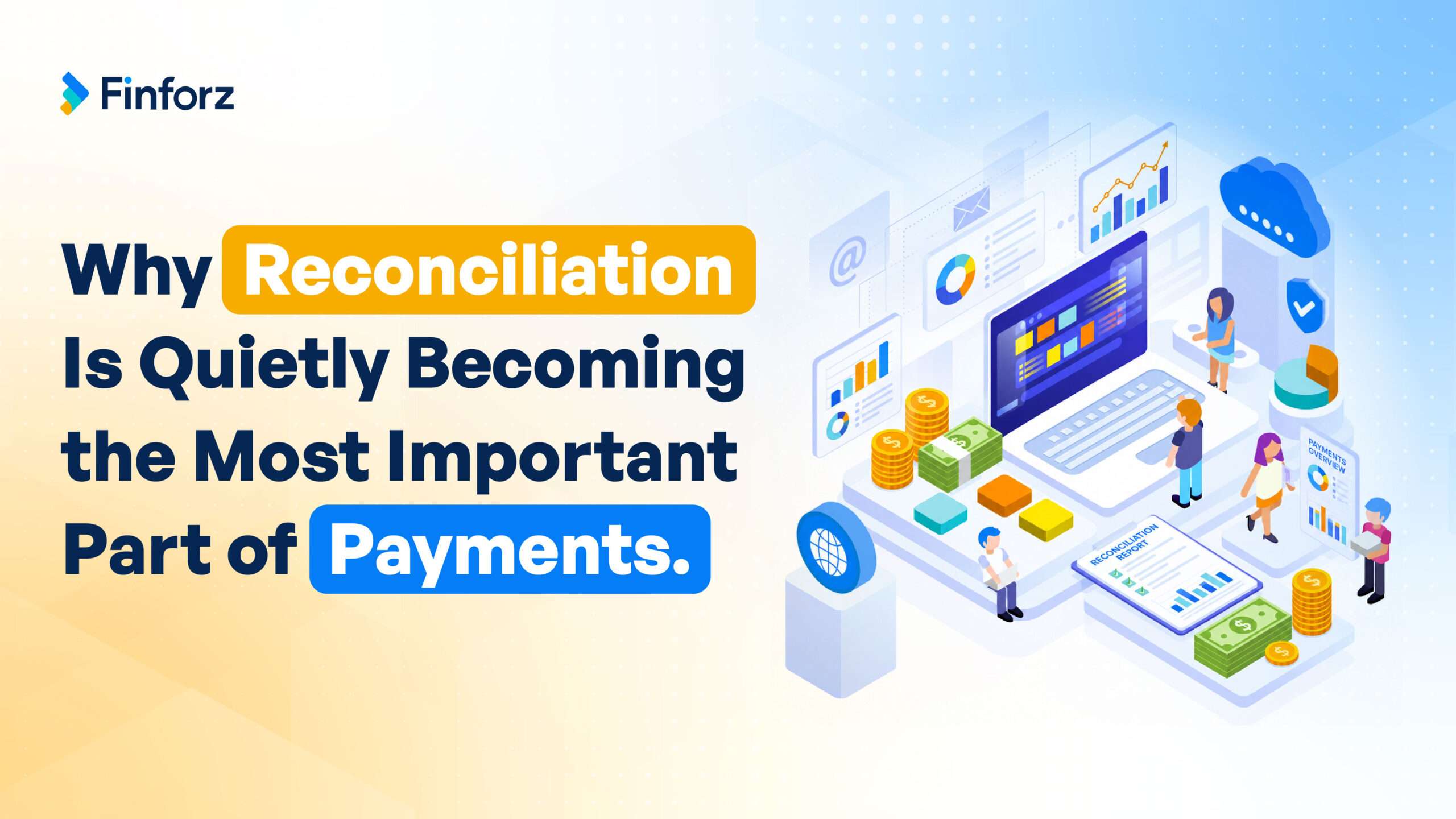
Why Reconciliation Is Quietly Becoming the Most Important Part of Payments
Every Successful Payment Creates an Invisible Operational Responsibility
In digital payments, success is often measured in milliseconds.
The customer scans a QR code.
The transaction succeeds.
The merchant receives a confirmation.
From the outside, everything appears seamless.
But for banks, payment aggregators, and merchant ecosystems, the real operational work begins after the transaction is completed.
Behind every successful payment lies a critical process that quietly determines:
- settlement accuracy
- merchant trust
- operational efficiency
- financial reporting integrity
- compliance readiness
That process is reconciliation. And as payment ecosystems scale across India and the GCC, reconciliation is rapidly evolving from a back-office function into strategic infrastructure.
Payments Are Growing Faster Than Operational Maturity
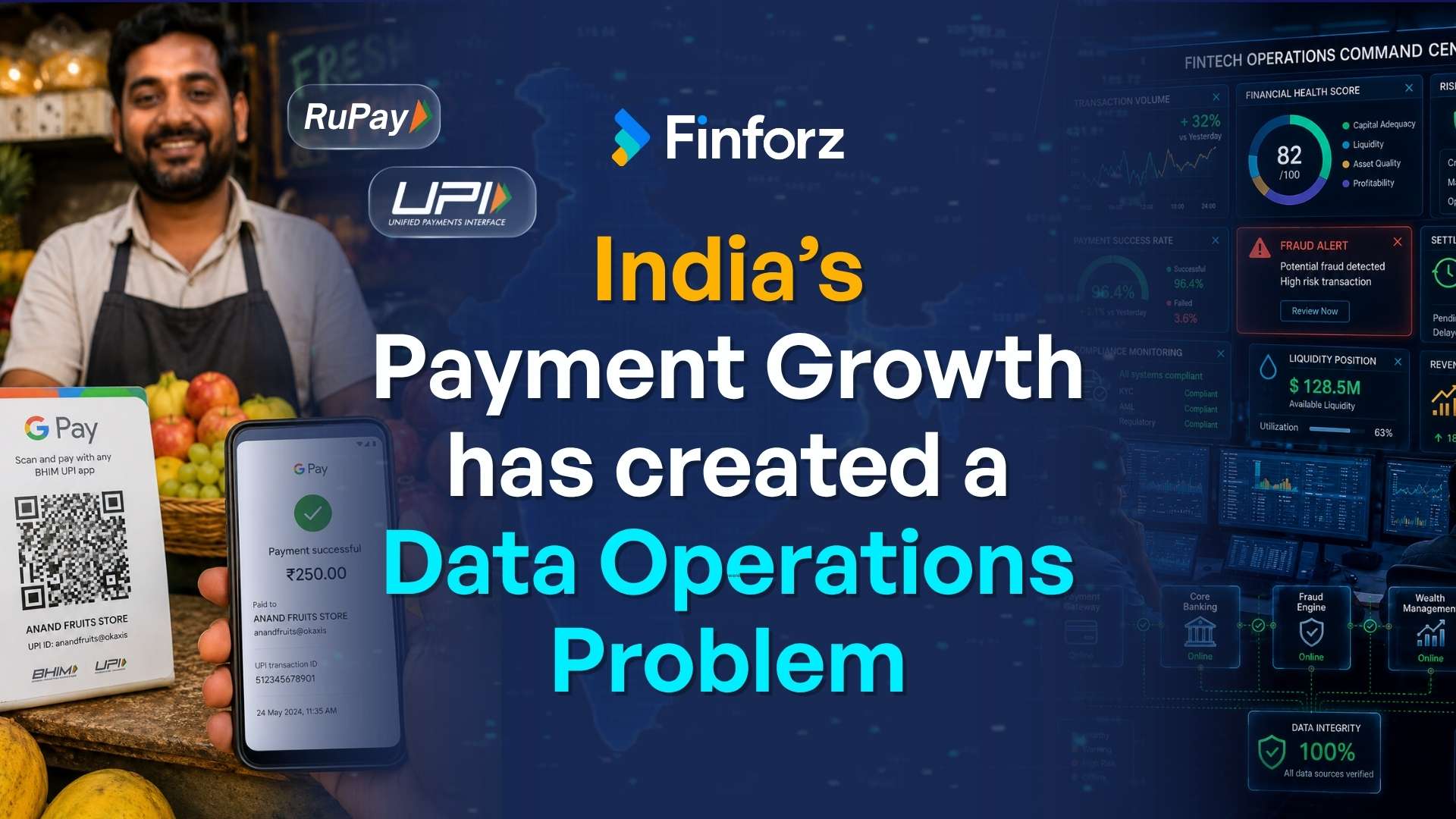
India’s digital payments ecosystem continues to expand at unprecedented speed.
According to NPCI, UPI processed more than 16 billion transactions in a single month in 2024, with transaction values exceeding ₹23 lakh crore.
At the same time:
- RuPay adoption continues to grow
- QR payments are mainstream
- Merchant onboarding is accelerating
- Real-time collections are becoming standard
Across the GCC, markets like Saudi Arabia, UAE, and Oman are also witnessing rapid growth in:
- instant payments
- wallet ecosystems
- digital merchant collections
- government digitization initiatives
But while payment speed has evolved dramatically, operational processes behind those payments often remain fragmented.
This is where reconciliation challenges begin.
What Is Reconciliation in Payments?
At its core, reconciliation ensures that:
every transaction processed matches every settlement recorded.
It validates whether:
- the amount debited equals the amount credited
- settlements reached the correct merchant
- fees and commissions are accurate
- refunds and reversals are properly accounted for
- reporting aligns across systems
In modern payment ecosystems, reconciliation happens across:
- payment gateways
- banks
- merchant systems
- UPI rails
- RuPay networks
- ERP systems
- wallets
- Settlement engines
At low transaction volumes, reconciliation may seem manageable.
At large scale, it becomes exponentially more complex.
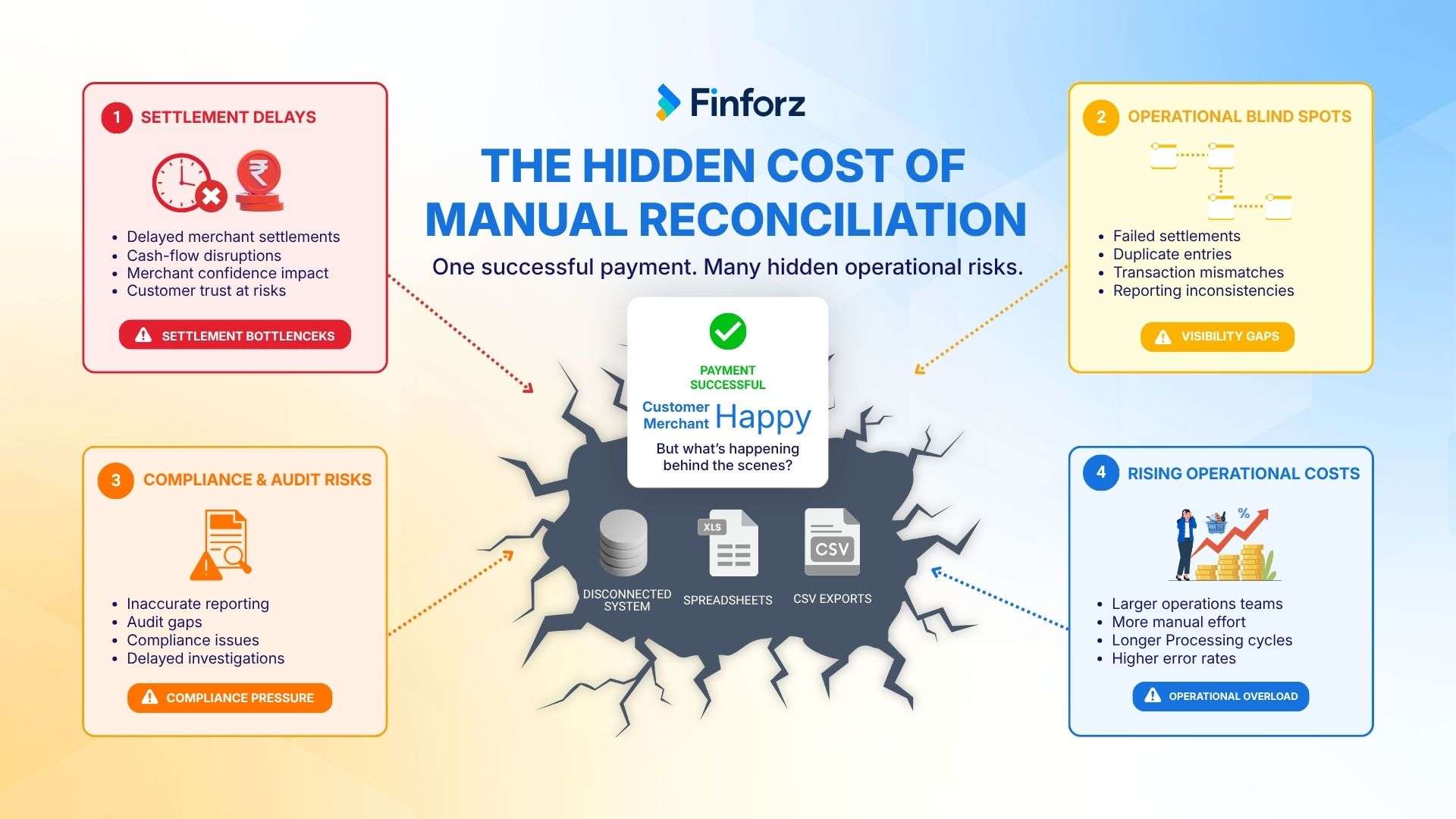
Why Reconciliation Is Becoming Strategic
Historically, reconciliation was viewed as: “back-office accounting.”
That mindset is changing rapidly.
Today, reconciliation directly impacts:
- merchant experience
- operational scalability
- payment reliability
- compliance readiness
- revenue assurance
In modern payment ecosystems, reconciliation is no longer just about balancing numbers.
It is about maintaining ecosystem trust.
Because even when payments succeed technically, operational inconsistencies can still damage:
- merchant confidence
- settlement reliability
- financial accuracy
Multi-Rail Payments Have Increased Complexity
Modern payment ecosystems no longer operate on one rail.
Banks and merchant platforms today manage:
- UPI
- RuPay
- QR payments
- payment gateways
- wallets
- net banking
- recurring mandates
- instant transfers
Each generates:
- different reporting formats
- different settlement cycles
- different reconciliation workflows
The result?
More rails.
More systems.
More operational complexity.
Without centralized reconciliation intelligence, scalability becomes difficult.
The Shift Toward Automated Reconciliation
As payment ecosystems mature, automation is becoming essential.
Modern reconciliation systems now focus on:
- real-time transaction matching
- automated exception detection
- centralized settlement visibility
- multi-rail reconciliation
- alert-based monitoring
- audit traceability
This shift enables institutions to move from:
Reactive operations ➝ Proactive operational intelligence
How Finforz PayHub Simplifies Reconciliation at Scale
Finforz Technologies PayHub is designed to help banks and financial institutions manage merchant payment ecosystems with greater visibility, automation, and operational control.
At the center of this ecosystem is PayHub’s intelligent reconciliation and billing engine.
Key Reconciliation Capabilities in PayHub
Automated Transaction Matching
PayHub automates transaction validation and matching across:
- payment gateways
- banks
- merchant systems
- settlement records
Reducing dependency on spreadsheets and manual verification.
Unified Settlement Visibility
Instead of managing multiple dashboards, PayHub provides centralized visibility across:
- collections
- payouts
- refunds
- settlements
- merchant transactions
Helping operations teams identify mismatches faster.
Real-Time Alerts & Exception Handling
PayHub enables:
- instant alerts for discrepancies
- anomaly detection
- settlement monitoring
- faster operational response
This reduces reconciliation delays and operational escalations.
Merchant Billing & Reporting
The platform also supports:
- automated billing workflows
- invoice management
- reporting visibility
- merchant-level financial tracking
Improving transparency across the merchant ecosystem.
Scalable for High-Volume Payment Environments
Whether managing:
- UPI collections
- RuPay transactions
- QR ecosystems
- merchant settlements
PayHub is designed for high-volume transaction environments where operational visibility becomes mission-critical.
Reconciliation Is Becoming the Foundation of Payment Trust
As payment ecosystems continue scaling across India and the GCC, reconciliation will become one of the most important operational functions inside financial institutions.
Because in modern payments:
Customers trust transaction success.
Merchants trust settlement accuracy.
Regulators trust operational transparency.
And reconciliation sits at the center of all three.
Final Thought
The future of payments will not be defined only by speed.
It will be defined by:
- operational accuracy
- settlement confidence
- visibility
- automation
- trust
At scale, payment ecosystems cannot rely on fragmented operational processes.
They need intelligent reconciliation infrastructure.
And that is exactly where Finforz PayHub positions itself.